
How Do I Build a Follow-Up System That Actually Works?
A follow-up system is fast first contact, a planned multi-touch cadence, and automation so nothing slips. Here's how to build one that recovers lost deals.

Evolvv Strategies
Operator notes
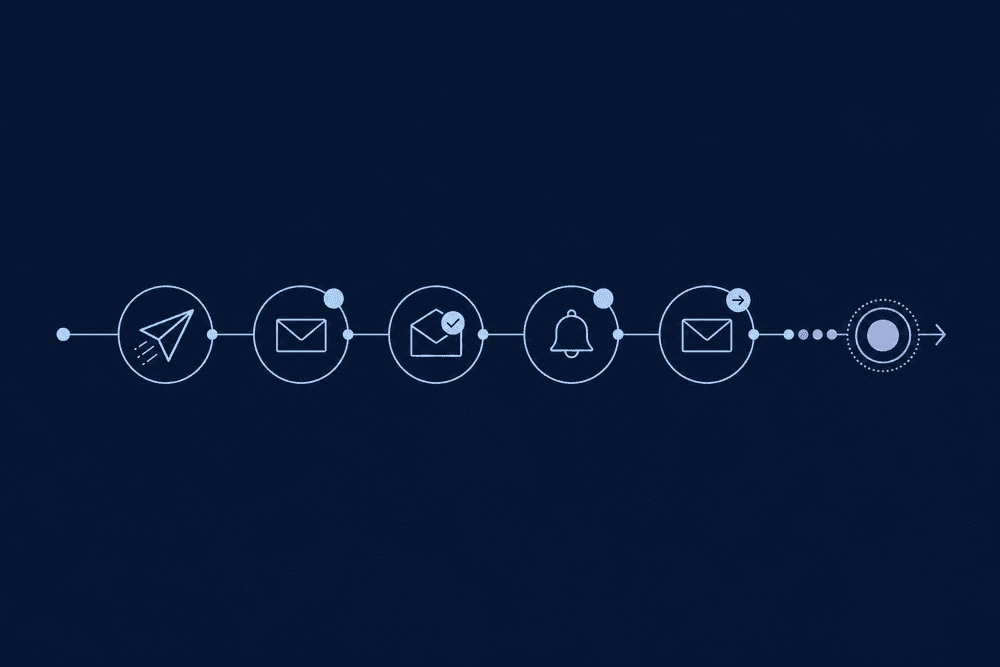
A follow-up system that works has three parts: respond to new leads within minutes, run a planned multi-touch cadence over the following weeks, and automate the timing so nothing slips through. Most deals don't die from a "no" — they die in the silence after the first contact. A system fills that silence.
Here's where small businesses quietly lose the most money: not in getting leads, but in what happens after. Someone inquires, gets one reply, and then both sides go quiet. The owner assumes they weren't serious. Usually they just got busy.
Follow-up is the cheapest growth lever there is, because you already paid to generate the lead. Let's stop losing them.
Start with speed-to-lead
The single biggest factor is how fast you respond to a fresh lead. Buying intent decays by the hour. A lead contacted within five minutes converts dramatically better than one called back the next day. Most owners take hours or days — which means the fastest fix is simply being first.
The first business to respond usually wins, regardless of who's actually best. Speed is a feature.
Build a multi-touch cadence
One follow-up isn't a system. Most sales need several touches, yet most owners give up after one or two. Plan a sequence and stick to it:
- Immediate: respond within minutes, confirm next steps.
- Day 2: add value — answer a question, send a relevant example.
- Day 5: a short, friendly check-in.
- Day 10: address the quiet objection — cost, timing, or risk.
- Day 16: a graceful close-the-loop that invites them to pick it back up anytime.
Mix the channels
Don't rely on email alone. A combination — a quick call, a text, an email — reaches people where they actually respond. Match the channel to the lead: some answer texts instantly and ignore email for a week. Meet them where they are.
Automate so nothing slips
The reason follow-up fails isn't usually laziness — it's that the owner gets busy and a lead falls through the cracks. Use a simple CRM or automation tool to trigger each touch on schedule. Automate the timing and the reminders; keep the messages human. That combination is what makes it reliable without making it robotic.
Persistence vs. pestering
Owners avoid following up because they fear being annoying. The difference is value: a follow-up that gives something — an answer, a resource, a useful nudge — reads as helpful. One that only says "just checking in" reads as needy. Make each touch worth opening.
I've seen a five-touch sequence recover a meaningful share of leads a business had already written off as dead — purely because someone finally followed up with something useful.
Here's what I'd actually do this week
Write a five-touch follow-up sequence and load it into whatever tool you have. Commit to responding to every new lead within the hour. That alone will recover deals you're currently losing to silence.
FAQ
How many times should I follow up with a lead?
Plan for at least five touches over two to three weeks. Most sales need several contacts, yet most owners stop after one or two and leave deals on the table. Space them out, make each one useful, and end with a graceful close-the-loop rather than an abrupt giving-up.
How fast do I really need to respond?
Within minutes if you can, and within the hour at the latest. Buying intent decays fast, and the first business to respond usually wins. A lead contacted in five minutes converts far better than one called back the next day. Speed-to-lead is often the cheapest, highest-impact fix available.
Won't frequent follow-up annoy people?
Only if every touch is about you. Follow-ups that give something — an answer, an example, a helpful nudge — read as service, not pestering. The needy version is "just checking in" with nothing attached. Lead with value each time and persistence comes across as confidence, not desperation.
Do I need a CRM to follow up well?
Not to start, but it helps fast. A spreadsheet and calendar reminders can run a basic cadence. As volume grows, a simple CRM or automation tool triggers each touch on schedule so nothing slips when you get busy. Start manual, then automate the timing once the sequence is proven.
Want a follow-up system that runs itself? Our Customer Acquisition work builds the cadence and automation — start with a free Growth Audit.