
What Should a Great Customer Onboarding Look Like?
A great customer onboarding confirms the buy, sets expectations, delivers a fast first win, and makes the next step obvious. Here's the checklist.

Evolvv Strategies
Operator notes
A great customer onboarding does four things in the first 30 days: it confirms the customer made a smart choice, sets clear expectations, delivers one fast win they can feel, and tells them exactly what happens next. Do those four well and you cut refunds, cancellations, and silence — and you earn the right to ask for a referral.
Most small businesses treat onboarding as paperwork. They collect payment, send a login or an invoice, and go quiet. The customer is left wondering if they made a mistake.
That gap — between buying and feeling like it worked — is where buyer's remorse lives. Onboarding is how you close it.
Why the first 30 days decide everything
The moment someone pays, their brain quietly asks: did I just waste my money? If your next move is a generic receipt and a week of silence, you've answered yes by default. People churn early not because the product is bad, but because nobody made them feel held.
The first 30 days set the tone for the whole relationship. A customer who gets a clear welcome, a quick result, and a sense of momentum becomes the kind of customer who renews and refers. One who gets dropped into the deep end becomes a support ticket, a chargeback, or a bad review.
Onboarding isn't admin. It's the first proof that buying from you was a good decision.
The five-step onboarding framework
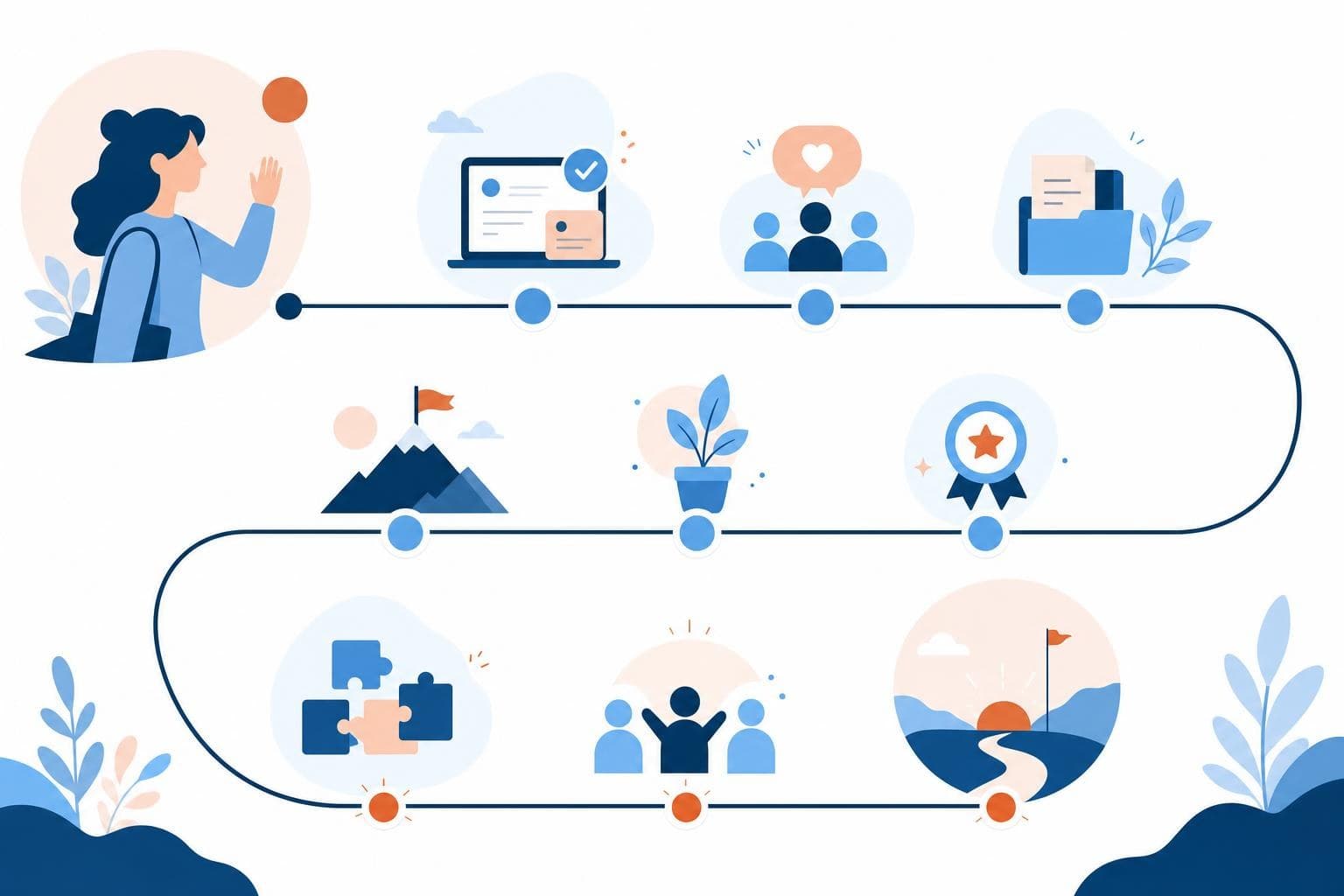
You don't need software for this. You need a sequence you run the same way every time. Here's the one I'd build first:
- Welcome and reassure. Within an hour of purchase, send a warm note that confirms what they bought, thanks them like a human, and tells them they're in good hands.
- Set the map. Lay out what happens next, when, and what you need from them. Remove every 'wait, what now?' before it forms.
- Deliver a fast first win. Find the smallest result they can feel in week one — a quick fix, a useful template, a small visible improvement — and ship it early.
- Check in on purpose. Around day 7 and day 21, reach out and ask how it's going. A two-line message beats a fancy survey nobody opens.
- Name the next step. Close the first 30 days by telling them what to do next — the upgrade, the renewal, the review, the referral. Make it obvious.
Run that sequence for everyone. Consistency is the point; a great onboarding that only happens when you remember isn't a system.
Make it personal without making it slow
The fear is that good onboarding eats your week. It doesn't, if you template it. Write each message once, leave blanks for the customer's name and their specific goal, and personalize only the parts that matter. In 2026 you can draft the whole sequence with an AI assistant and a clear prompt in an afternoon, then reuse it forever.
When I onboarded clients at my last company, the single highest-return change we made was sending a short personal video on day one. Two minutes, recorded on a phone, saying their name and what we'd get done first. Replies went up, cancellations went down, and people mentioned that video for months. It cost us nothing but a little courage.
Quick wins you can try this week
- Write a one-paragraph welcome message and send it to every new customer within an hour of purchase.
- List the first 30 days as a simple timeline so the customer always knows what's next.
- Pick one 'fast win' you can deliver in week one and build it into the sequence.
- Add a day-7 and day-21 check-in — two short, human messages, nothing fancy.
- Record a 90-second welcome video on your phone and reuse it for everyone.
FAQ
How long should customer onboarding last?
Plan for the first 30 days, with the most attention in week one. The goal is to get the customer to a real first win quickly and to a clear next step by the end of the month. Some products need longer, but 30 days is the window where most churn happens, so that's where your effort pays off most.
What's the single most important onboarding message?
The welcome message in the first hour. It reassures the customer they made a good decision before doubt sets in and frames everything that follows. Get that one warm, clear, and fast, and you've already beaten most businesses in your category.
Do I need onboarding software to do this well?
No. A consistent sequence of templated emails or messages, sent the same way every time, beats expensive software used inconsistently. Start with a simple checklist and a few saved templates. Add automation later, once the sequence is proven and you're tired of sending it by hand.
How do I know if my onboarding is working?
Watch three numbers: early cancellations or refunds, time-to-first-win, and how many customers reply to your check-ins. If cancellations drop and replies rise, your onboarding is doing its job. If people go silent in the first month, that's your signal to tighten the sequence.
If you want a clear-eyed look at where new customers drop off, a free Growth Audit maps your first-30-days experience and shows the first fix — or see how we work to build the whole onboarding system with you.