

Are Google Ads Worth It for a Small Business?
Google Ads are worth it when you sell something people search for and your math works. Here's how to know if Google Ads pay off for your small business.

Evolvv Strategies
Operator notes
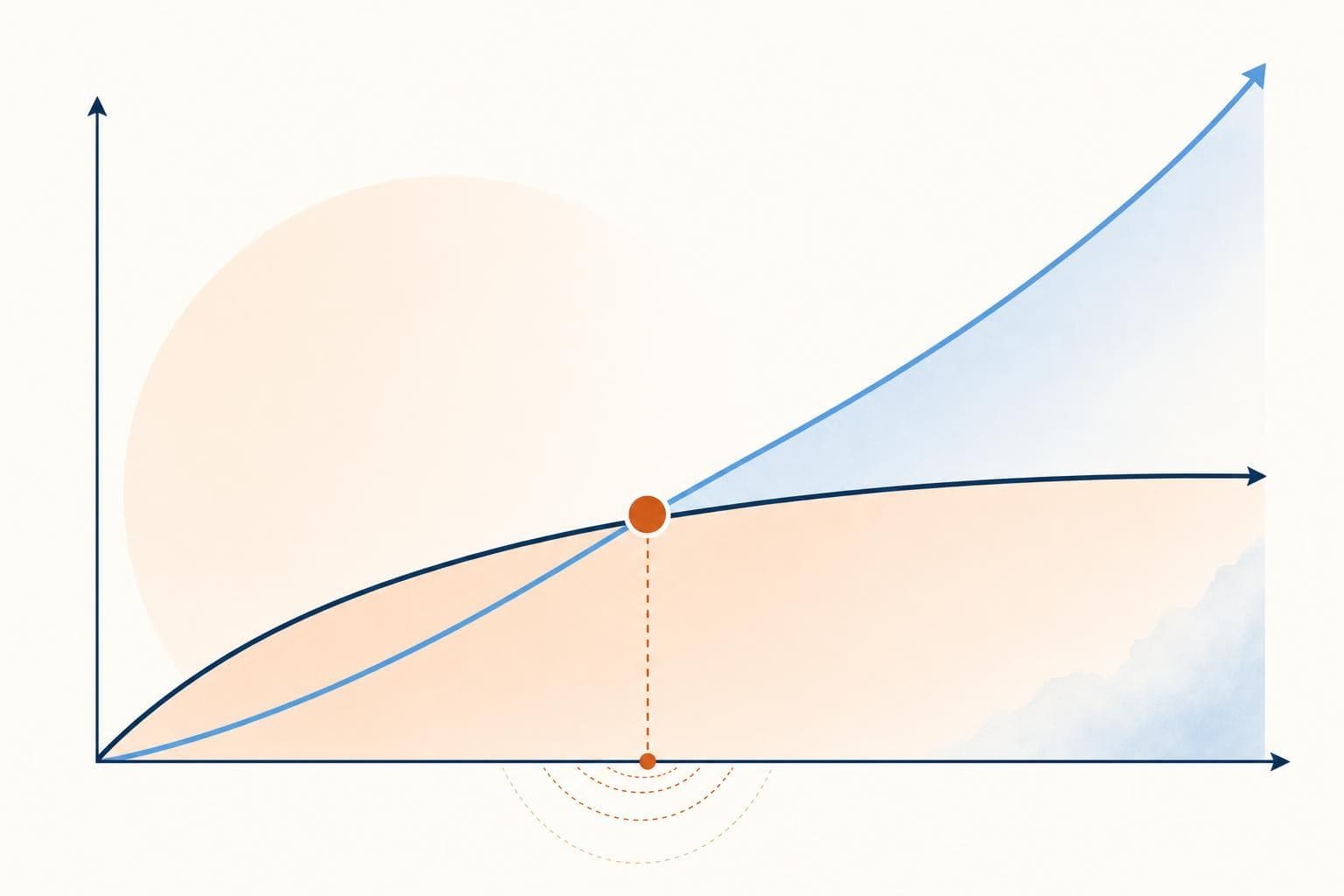
Google Ads are worth it for a small business when you sell something people actively search for, your average customer is worth more than it costs to acquire one, and your website converts that traffic. If those three things are true, Google Ads can be highly profitable. If not, they'll quietly drain your budget.
Every owner has heard both stories: "Google Ads made my business" and "I lost two grand and got nothing." Both are true.
The difference isn't luck. It's whether the math worked before they ever pressed go.
What makes Google Ads different from other ads
Google Ads catch people at the exact moment they're looking for what you sell. Someone typing "emergency plumber near me" has their wallet half out. That intent is what makes search ads so powerful — you're not interrupting people, you're answering them.
That's also why they only work for certain businesses. If people don't search for your thing, there's no intent to catch. A new, unknown product nobody knows to look for is a poor fit for search ads — that's a job for social or content, where you create demand instead of capturing it.
Google Ads don't create demand. They catch demand that already exists.
Run the math before you run the ad
Most Google Ads failures aren't bad ads — they're bad math nobody checked first. Before spending a dollar, you need to know two numbers: what a customer is worth to you, and what it costs to get one.
If a customer is worth 2,000 dollars over their lifetime and it costs you 200 dollars in ad spend to win one, that's a great trade. If a customer is worth 50 dollars and it costs 80 to acquire them, you lose money on every sale and "scaling up" just loses faster. Know your numbers before you trust your gut.
When I ran my last company, the campaigns that worked all shared one thing: we knew our cost-per-customer and our customer value cold, and only scaled the ones where the gap was clearly positive. The ones we ran on vibes are the ones that burned cash.
How to test Google Ads without gambling
You don't have to bet big to find out if ads work for you. Run a small, controlled test:
- Know your numbers first. Calculate what a customer is worth and the most you can pay to acquire one and stay profitable.
- Target high-intent searches only. Bid on terms that signal someone's ready to buy, not vague browsing keywords.
- Send clicks to a focused landing page. Match the page to the search, with one clear action. Don't dump paid traffic on your homepage.
- Set a small test budget and a deadline. Spend enough to get real data, with a hard stop to review results.
- Track to actual customers, not clicks. Measure cost per real lead and per closed sale, then scale only what profits.
Why ads expose the rest of your business
Here's what surprises people: Google Ads often fail not because the ads are bad, but because the website is. You can buy perfect clicks, but if the page is slow, confusing, or has a weak call to action, that traffic bounces and your money's gone.
Paid traffic is unforgiving — it spotlights every weakness in your funnel. That's why I tell owners to fix their conversion path before scaling spend. Better to send paid clicks to a page that converts at 5% than to pour budget into one that converts at 1%. This is exactly the kind of thing our services tighten up first — see how we work.
Ads don't fix a broken funnel. They just help you lose money faster.
Quick wins you can try this week
- Calculate what one customer is worth to you over their lifetime.
- Search the terms a ready-to-buy customer would type and see if competitors are already advertising — that's a signal it pays.
- Decide the most you can spend to acquire a customer and still profit.
- Build one focused landing page that matches a single high-intent search.
- Set up tracking so you measure cost per actual sale, not just per click.
FAQ
How much should a small business spend on Google Ads to start?
Enough to gather real data, often a few hundred to a thousand dollars over a few weeks, with a hard stop to review. Start small, target only high-intent searches, and scale only the campaigns that prove profitable. The goal of the first budget is to learn your numbers, not to win big.
How do I know if Google Ads are profitable for me?
Compare what it costs to acquire a customer against what that customer is worth to you over time. If your customer value comfortably exceeds your cost per sale, ads are profitable and worth scaling. Track all the way to closed sales, not just clicks, or you'll mistake activity for results.
Why are my Google Ads not converting?
Usually the problem is after the click — a slow page, an unclear offer, or a weak call to action. Paid traffic exposes every funnel weakness. Before blaming the ads, make sure clicks land on a focused page that matches the search and asks for one clear action.
Are Google Ads better than social media ads?
They're different tools. Google Ads capture existing demand from people already searching, which suits services and known products. Social ads create demand and build awareness, which suits new or visual products. The right choice depends on whether people are already looking for what you sell.
Not sure if your site can turn paid clicks into customers? A free Growth Audit checks your funnel first, so you don't pay Google to send traffic to a leaky page.