

How Do I Know If My Website Is Actually Working?
Your website is working if it turns visitors into leads or sales — measure conversion rate, not just traffic. Pretty and busy aren't the same as effective.

Evolvv Strategies
Operator notes
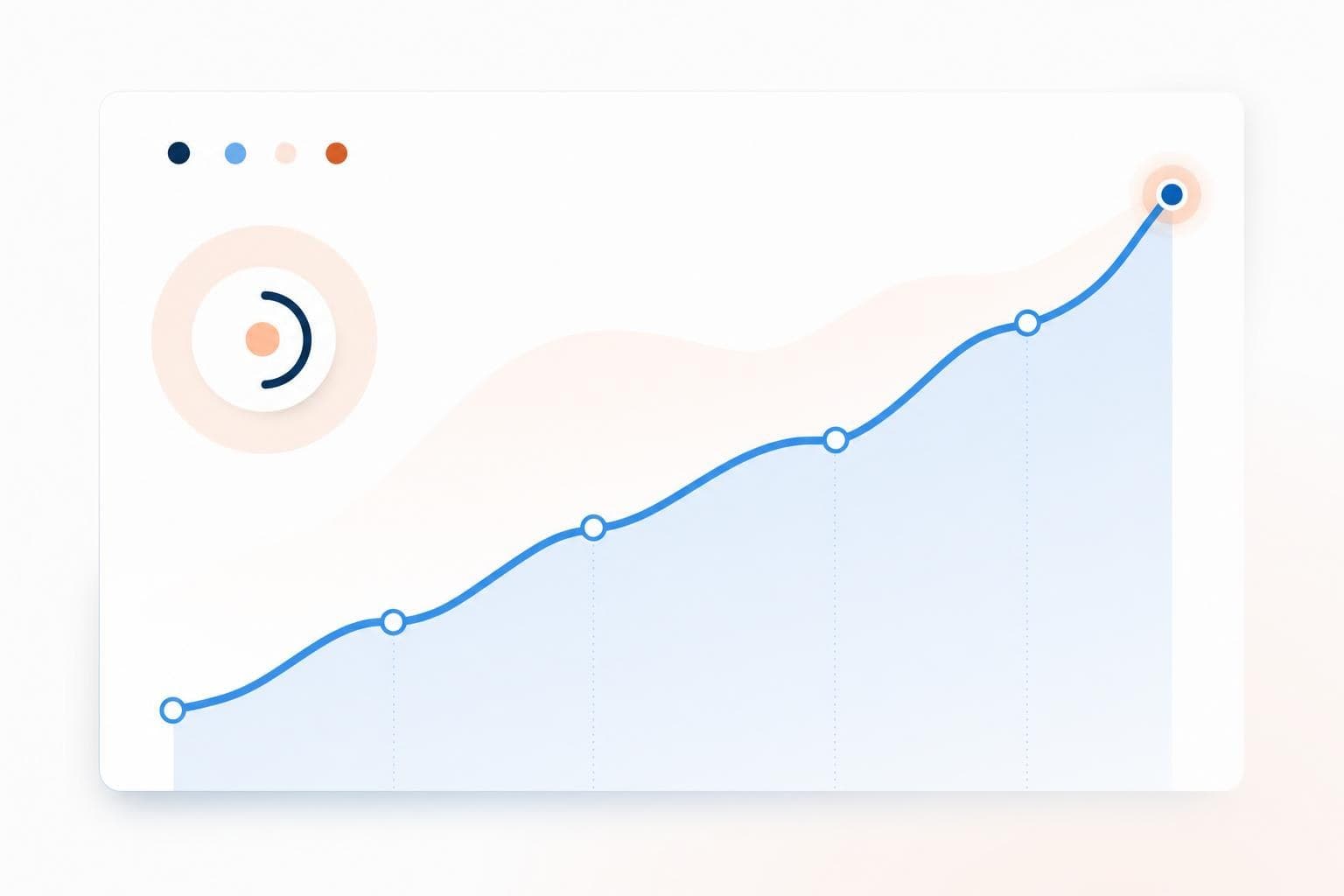
Your website is working if it reliably turns visitors into leads, calls, or sales — not just if it looks good or gets traffic. The single number that matters most is conversion rate: of the people who arrive, how many take the action you want. A pretty, busy site that converts no one is a brochure, not a business tool.
Most owners judge their site by feel. It looks nice, it's been updated, a few people complimented it. None of that tells you if it's actually earning its keep.
The honest test is colder: does it produce customers? Plenty of beautiful websites are quietly broken, and plenty of plain ones quietly print money. You can't know which you have until you measure.
Traffic is a vanity number on its own
'We get 3,000 visitors a month' sounds great until you ask how many became leads. If the answer is two, you don't have a traffic problem — you have a conversion problem, and more visitors will just mean more people leaving without acting.
Traffic only matters in relation to what it produces. A site with 300 visitors and a 5% conversion rate beats one with 3,000 visitors and a 0.2% rate. Chase the ratio, not the raw count. The ratio is where the money actually lives.
More traffic to a broken site just means more people watching you fail, faster.
The numbers that actually tell you
You need four, and they're all free to track. Conversion rate: visitors who take the key action. Bounce or engagement: whether people stay or instantly leave. Traffic source: where they come from, so you know what's working. And the path to your main action: where people drop off before converting.
A typical small-business site converts somewhere around 2 to 5% of visitors into a lead or sale. If you're well under that, the site has a problem worth fixing. If you don't know your number at all, that's the first thing to fix — you're flying blind.
Watch real humans use it
Numbers tell you what's happening; watching tells you why. Tools that record anonymous sessions or heatmaps show you exactly where people get confused, rage-click, or give up. It's humbling and incredibly useful — you'll spot problems no analytics chart would ever surface.
If you can't set that up, do the cheap version: hand your phone to someone unfamiliar with your business and ask them to find your main offer and 'buy' it. Watch silently. Every hesitation is a leak. You'll learn more in five minutes than from a month of guessing.
The is-it-working method
- Define the one action. Decide what a 'win' is — a call, a form, a booking, a sale. Without this, nothing else can be measured.
- Install free analytics. Set up tracking so you can see visitors and how many complete that action.
- Calculate your conversion rate. Wins divided by visitors. This single number tells you more than any compliment.
- Find the drop-off. Look at where people leave before converting — a slow page, a confusing form, a missing answer.
- Fix one leak and re-measure. Change the biggest drop-off point, then check whether the conversion rate moves.
If you'd like that whole picture handed to you, a free Growth Audit reports your conversion path and the biggest leaks for you.
A real example
In 15 years of building businesses, the most expensive blind spot I see is owners proud of traffic they're not converting. One client had a gorgeous, award-worthy site and 4,000 monthly visitors — and almost no leads. We added simple analytics and watched session recordings. People loved the homepage, scrolled it fully, then hit the contact page and bounced. The form had eleven fields, including 'company size' for a business that served homeowners. We cut it to three fields. Conversions on the same traffic jumped roughly fourfold in a month. The site wasn't ugly. It was leaking, and nobody had looked.
Measure first, opinionate second. See how we work for how we find the leak.
Quick wins you can try this week
- Write down the single action that counts as a 'win' on your site — call, form, booking, or sale.
- Confirm free analytics is installed and actually tracking that action.
- Calculate your conversion rate: wins divided by visitors. If it's under 2%, you've found a project.
- Hand your phone to someone unfamiliar and watch them try to complete your main action.
- Count the fields on your contact or booking form and cut every one you don't truly need.
FAQ
What's a good website conversion rate for a small business?
Roughly 2 to 5% of visitors becoming a lead or sale is typical, though it varies by industry and traffic quality. Well below that signals a problem worth fixing. The most important step is simply knowing your number — many owners have never measured it and are guessing.
Is more website traffic always good?
Not on its own. Traffic only matters in proportion to how much of it converts. Sending more visitors to a site that converts poorly just multiplies the people who leave without acting. Fix the conversion rate first, then scale traffic into a site that actually closes.
How do I track if my website is converting?
Install free analytics, define your key action, and divide completions by total visitors to get your conversion rate. Add session recordings or heatmaps to see where people drop off. Together these tell you not just whether the site works, but exactly where it's leaking.
My website looks great but gets no leads — why?
Looks and effectiveness are different things. A beautiful site can still bury its offer, load slowly, or ask too much on a form. Watch real people use it and check your conversion path; the problem is usually a specific friction point, not the design itself.
Not sure whether your site is converting or just sitting pretty? A free Growth Audit measures the path from visitor to lead and shows you the leaks costing you customers.