
Do I Even Need a Website If I Have Social Media?
Yes — social media is rented land you don't control. A website is the one asset you own. Here's why you still need both, and what each is for.

Evolvv Strategies
Operator notes
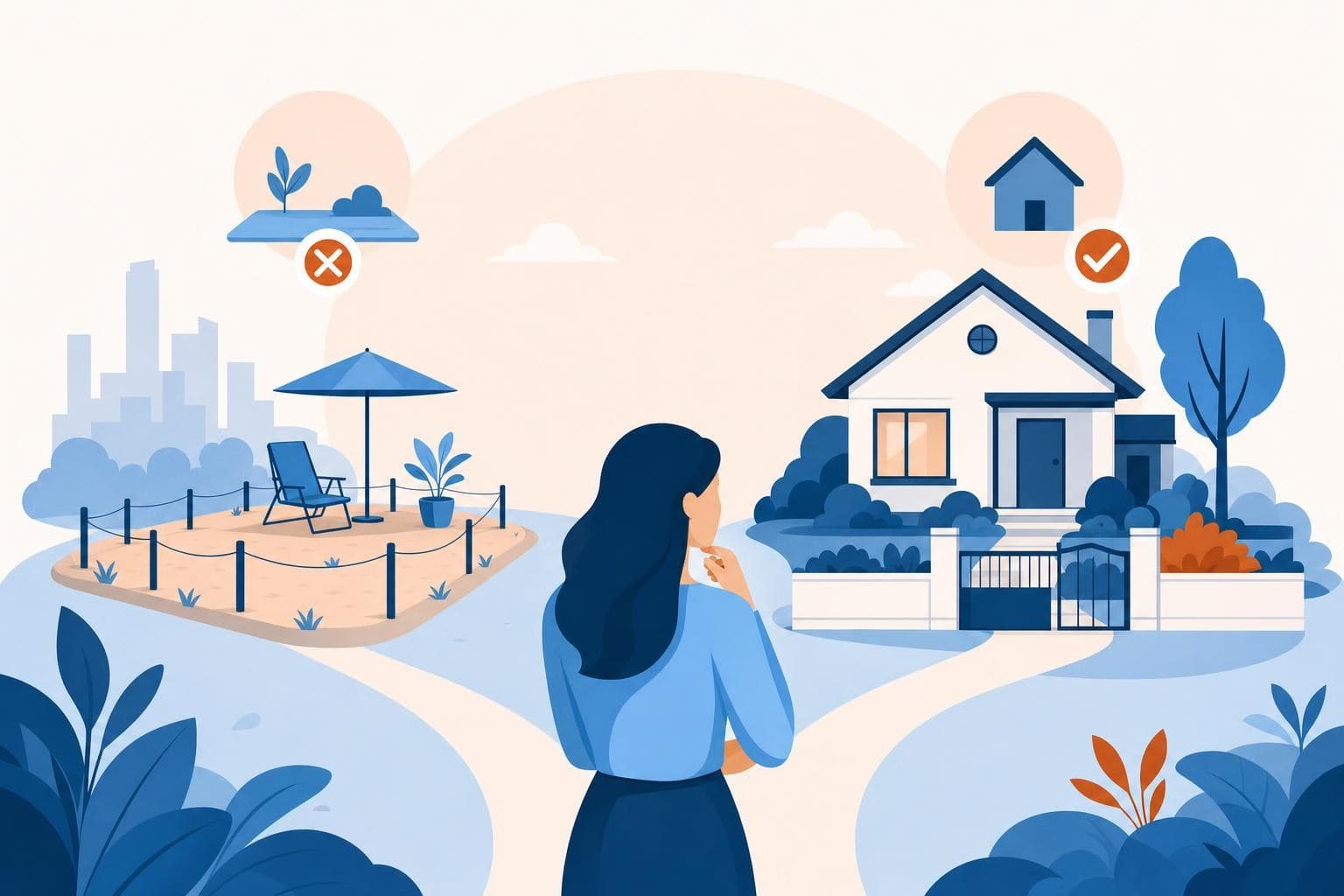
Yes, you still need a website even with a strong social media presence. Social platforms are rented land — you don't own the audience, the rules, or the reach. A website is the one asset you fully control: your home base for booking, buying, getting found on Google, and being cited by AI answer engines.
I hear this question almost weekly. A business is doing well on Instagram, the DMs are busy, and the owner wonders why they'd pour money into a website too.
It's a fair question. But it mixes up two different jobs — and skipping the website usually costs more than it saves.
Rented land versus owned land
Think of social media as a stall in someone else's market. The foot traffic is real, but the landlord sets the rent, decides who sees your stall, and can move you to the back — or close the market entirely. An algorithm tweak can cut your reach by half overnight, and you have no recourse.
A website is land you own. Nobody throttles it. Nobody changes the layout on you. When someone Googles your business at 10pm, your site is what shows up — open, on your terms, with your phone number and your booking link front and center.
Social media is where people discover you. Your website is where they decide to trust you.
In 2026 there's a second reason that matters more every month: AI answer engines like ChatGPT and Google's AI Overviews pull from indexable web pages, not from your private social feed. If your knowledge lives only inside Instagram, the tools your customers now ask for recommendations can't see you at all.
What each channel is actually for
The mistake is treating these as either/or. They're a relay. Social media earns attention. Your website earns the decision. One feeds the other.
Social is built for reach, personality, and proof — short video, behind-the-scenes, reviews, the human face of the business. It's where a stranger first feels something about you.
Your website is built for conversion and depth — clear services, real prices or starting points, a frictionless way to book or buy, and the answers a serious buyer needs before they commit. It's where a fan becomes a customer. Try closing a 5,000-dollar job in a comment thread and you'll feel the difference fast.
The relay that actually converts
The businesses that win online run a simple loop instead of betting everything on one channel.
- Earn attention on social. Post the content that gets discovered — useful, human, frequent.
- Send that attention somewhere you own. Every bio, every post, points to your website, not just to more posts.
- Convert on the website. Make the next step obvious: book, buy, or get the lead magnet in one click.
- Capture the contact. An email or a booking is yours forever; a follower is borrowed.
- Get found when they search. Your site ranks on Google and feeds AI answers while you sleep.
When I ran my last company, our best month came from a single viral video — but the revenue only landed because the video drove people to a page we owned, where they could actually buy. Without that page, it would have been 200,000 views and a nice ego boost. Want a look at how we connect the two? Here's how we work.
Quick wins you can try this week
- Put a real website link in every social bio — not a link to another social profile.
- Add one clear call-to-action button above the fold on your homepage: Book, Buy, or Get a Quote.
- Move your prices, services, and FAQs onto your site so AI tools and Google can read them.
- Start collecting emails with a simple offer, so you own at least part of your audience.
- Check your site on a phone — over half your social traffic will land there on mobile.
FAQ
Can a website replace social media entirely?
No, and it shouldn't try. They do different jobs. Social media earns attention and builds familiarity; your website earns the decision and the sale. The strongest setup uses social to drive traffic to a site you own and control.
I'm a tiny business — is a full website overkill?
A full ten-page site might be. But even a single, well-built page with your services, a way to book, and your contact details beats relying on a social profile alone. It gets you on Google and gives serious buyers a place to say yes.
What happens if I only use social media?
You're building your business on land you don't own. An algorithm change, a hacked account, or a banned profile can erase your reach overnight with no backup. You also stay invisible to Google search and AI answer engines, which only read public web pages.
Does a website help me show up in AI search results?
Yes. Tools like ChatGPT and Google AI Overviews pull answers from indexable websites, not private social feeds. Clear, well-structured pages about your services and common questions make it far more likely an AI recommends you when a customer asks.
Not sure whether your website is actually pulling its weight next to your socials? A free Growth Audit shows you exactly where customers drop off and what to fix first.