
Why Does My Business Make Money but Always Feel Broke?
Profit and cash are different things. Here's why a profitable business runs out of money — and how to fix the cash gap.

Evolvv Strategies
Operator notes
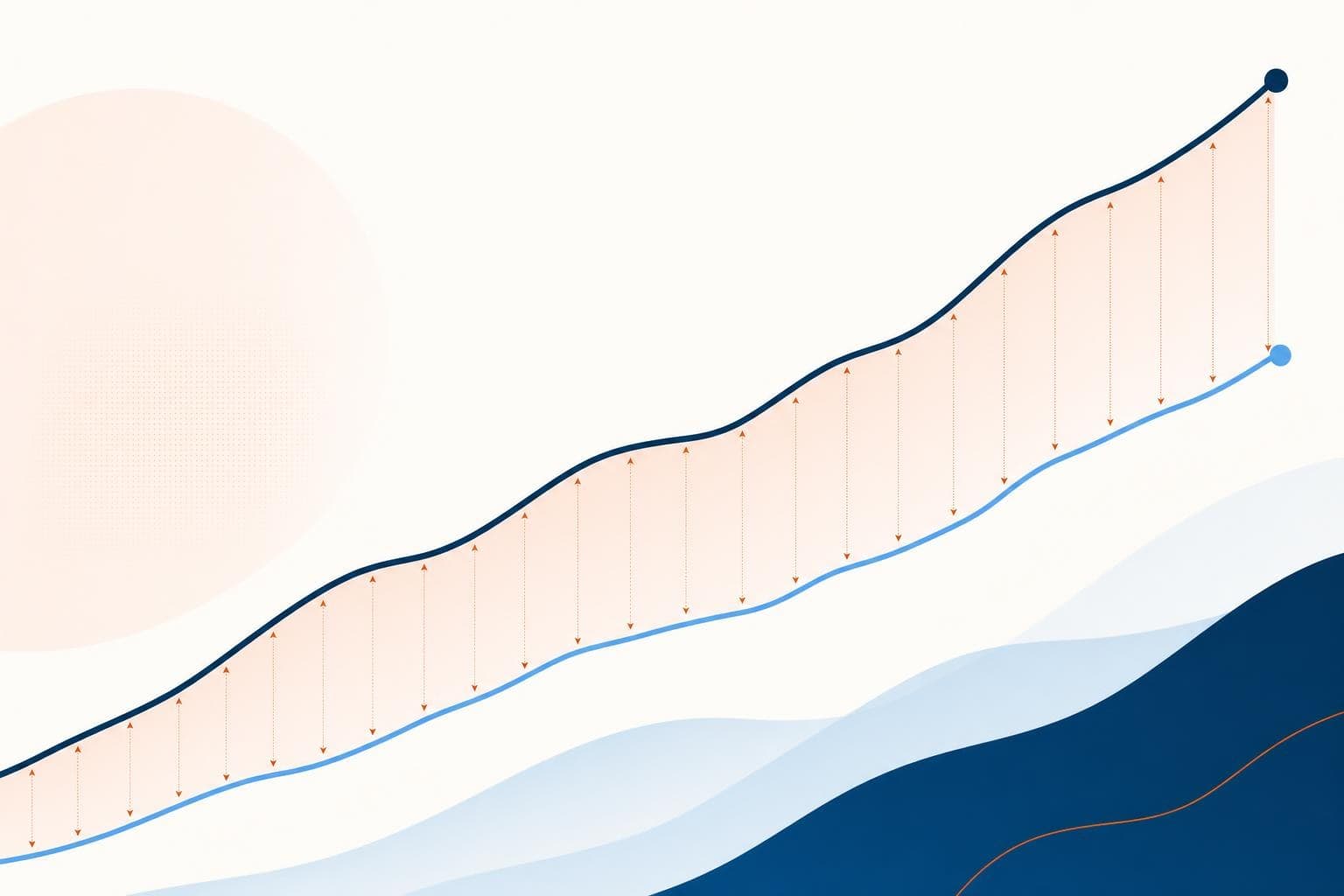
Your business feels broke despite profit because profit and cash are different things. Profit is what you earned on paper; cash is what's actually in the bank right now. Money gets trapped in unpaid invoices, inventory, taxes, and loan payments — so you can be profitable and still unable to pay this week's bills.
This is one of the most common and most stressful experiences in small business. The accountant says you made money. The bank account says otherwise. Both are telling the truth.
The gap between them has a name — the cash flow gap — and once you see where the money hides, you can close it.
Where your cash actually goes
Profit on your books doesn't mean money in your hand. The two drift apart for a handful of predictable reasons, and almost every cash-starved-but-profitable business is bleeding through at least one of them.
The biggest culprit is timing. You do the work in January, invoice in February, and get paid in April — but you paid your team and your suppliers back in January. The profit is real; it just hasn't arrived yet. Add inventory you bought but haven't sold, taxes you owe but haven't set aside, and loan principal that hits your account but never shows up as an expense, and the mystery dissolves.
Profit is an opinion. Cash is a fact. Run your business on the fact.
The five places money hides
Track down your trapped cash and you'll almost always find it in one of these. Most owners are surprised by how much is sitting in accounts receivable — work they've delivered but haven't collected on.
When I dug into this at my last company, we had a profitable quarter and a near-empty bank account. The problem was 90-day payment terms with a couple of big clients. We were effectively lending them money to do their work. We shortened terms, took deposits up front, and within two months the bank balance finally matched the profit we'd supposedly been making all along.
How to close the cash gap
- Speed up money coming in. Take deposits, shorten payment terms, invoice the day work is done, and chase late payers fast.
- Slow down money going out. Negotiate longer terms with suppliers and stop pre-paying for things you don't need yet.
- Set aside tax as you earn. Move a fixed percentage of every payment into a separate account so tax season never empties you.
- Right-size inventory. Cash sitting on shelves isn't profit, it's frozen money. Buy to demand, not to feel stocked.
- Build a cash buffer. Hold a floor of operating cash so timing gaps stop turning into emergencies.
Do those five and the broke-but-profitable feeling fades, because your cash starts arriving closer to when you actually earned it. If you want a clear read on where your money is trapped, that's the kind of thing a free Growth Audit can flag quickly.
Watch cash, not just the P&L
The deeper fix is a habit change. Most owners only ever look at the profit-and-loss statement, which hides timing entirely. Start watching a simple weekly cash view instead: what's in the bank, what's coming in, what's going out over the next few weeks. That single forward-looking number prevents most cash crises, because you see the squeeze coming weeks before it arrives. Building that kind of clear, decision-ready view is central to how we work with owners.
Quick wins you can try this week
- Add up every unpaid invoice right now — that's cash you've earned but haven't collected.
- Send a friendly reminder to every customer who's past due today.
- Open a separate account and move a fixed percentage of each payment into it for taxes.
- Start taking a deposit up front on your next few projects instead of billing only at the end.
- Build a one-page view of cash in the bank plus money expected in and out over the next four weeks.
FAQ
What's the difference between profit and cash flow?
Profit is revenue minus expenses on paper over a period; cash flow is the actual money moving in and out of your bank in real time. You can be profitable but cash-poor if customers haven't paid yet or money is tied up in inventory and taxes. Cash flow is what actually keeps the lights on.
Why do I owe taxes when I don't have the money?
Tax is calculated on your profit, not your bank balance, so you can owe tax on income that's still sitting in unpaid invoices or already spent on inventory. The fix is to set aside a fixed percentage of every payment as you earn it. Treat that money as gone the moment it arrives.
How much cash buffer should I keep?
A common target is three to six months of operating expenses, but even a few weeks' buffer dramatically reduces stress. Start with a floor you never drop below and build from there. The buffer is what turns a timing gap from a crisis into a non-event.
Should I use a line of credit to cover cash gaps?
A line of credit is a useful safety net for short timing gaps, but it's a bandage, not a cure. If you're constantly drawing on it, the real problem is in your terms, collections, or pricing. Fix the underlying cash gap first, and keep the credit line for genuine surprises.
Not sure where your cash is getting trapped? A free Growth Audit takes a look at your business and points you to the leak.